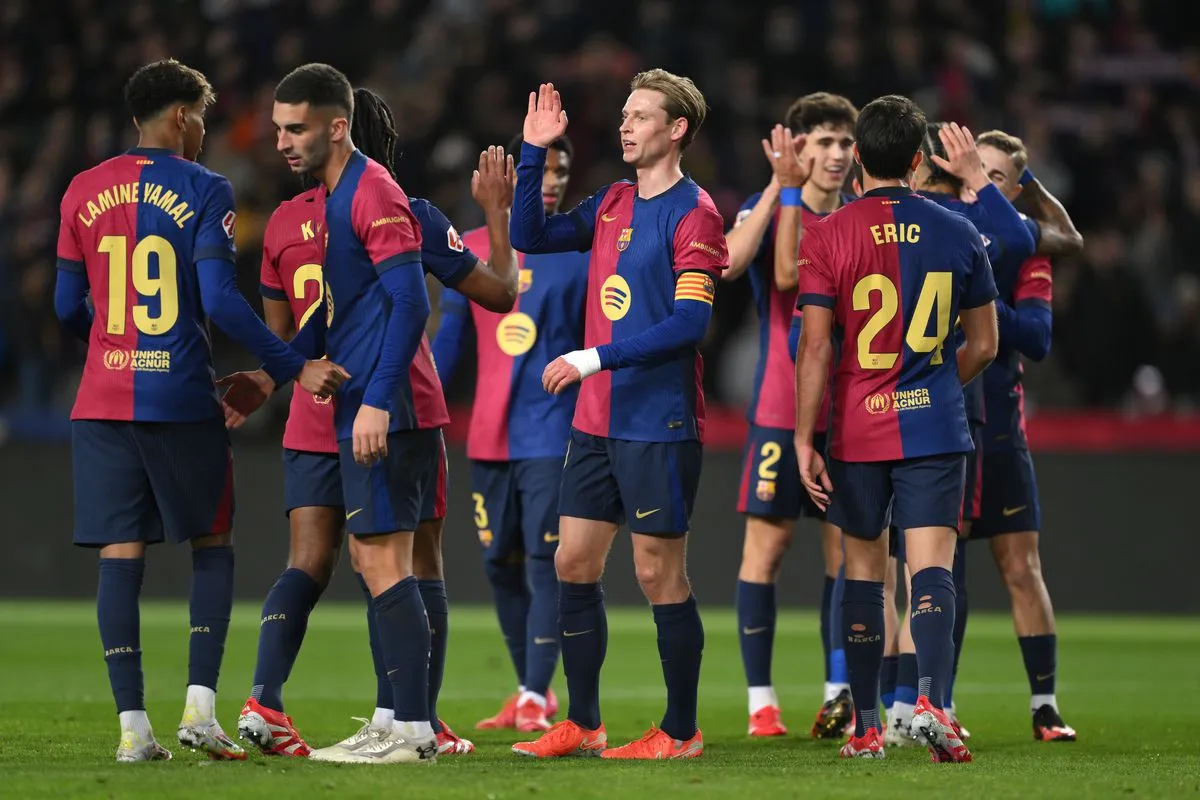
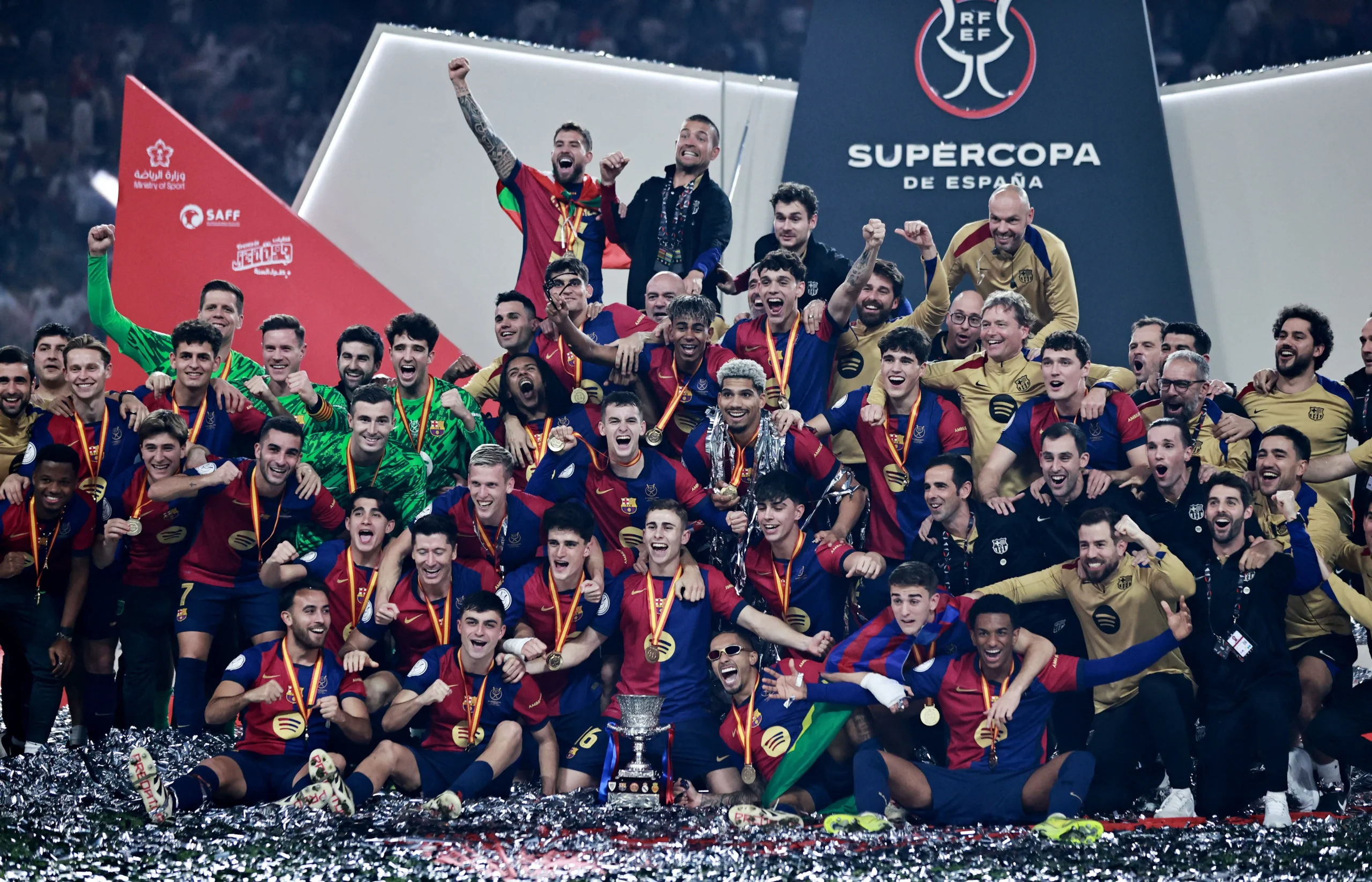
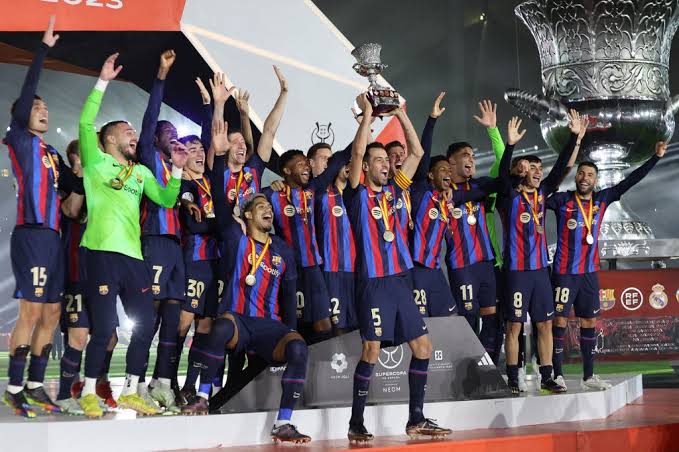
When discussing footballing supremacy in Spain, FC Barcelona stands as a titan of domestic success. The Spanish Super Cup has long served as a stage for the Catalan giants to showcase their brilliance to the world.
Throughout their most successful eras, this trophy was more than a season-opener; it was a statement of intent. From the “Dream Team” to the tiki-taka revolution, Barcelona’s DNA is woven into the very fabric of this competition.
The Guardiola Revolution: A New Standard of Excellence
The era under Pep Guardiola redefined what dominance looked like in the Spanish Super Cup.
Between 2009 and 2011, Barcelona secured three consecutive titles, playing a brand of football that left opponents chasing shadows.
This period wasn’t just about winning; it was about the psychological edge gained before the La Liga season even kicked off.
During these years, the Spanish Super Cup became a showcase for the academy’s finest talents.
Xavi, Iniesta, and Messi turned the pitch into a masterclass of passing and movement.
Their ability to dismantle rivals in this competition set the tone for their historic sextuple and subsequent trophy hauls.
Lionel Messi: The Undisputed King of the Tournament
No player has left a deeper mark on the Spanish Super Cup than Lionel Messi.
As the all-time leading scorer in the competition’s history, the Argentine magician turned finals into his personal highlight reels.
His performances, especially in the high-stakes Clásicos, remain legendary among the Blaugrana faithful.
- Record Scorer: Messi holds the record for the most goals in tournament history.
- Clutch Moments: He consistently delivered match-winning goals against Real Madrid and Athletic Bilbao.
- Consistency: He helped the club maintain a winning culture across three different decades.
Evolution of the Format and Continued Legacy in Spanish Super Cup
Even as the Spanish Super Cup evolved into a four-team “Final Four” format, Barcelona’s pedigree remained evident.
The shift to international venues brought new challenges, yet the drive to remain Spain’s most successful club in this category never wavered.
Despite the increased competition, the club’s historical record in the Spanish Super Cup remains a point of pride.
Every new generation of stars at the Camp Nou aims to replicate the dominance of the past.
As the tournament continues to grow globally, Barcelona’s golden era serves as the ultimate benchmark for success.
Given Barcelona’s historic dominance, do you think the new four-team format makes it harder for them to maintain their record, or does it simply add more prestige to the trophy?