
The landscape of Spanish football has shifted dramatically over the last few years, moving its traditional trophies far beyond the borders of the Iberian Peninsula.
Since 2020, the Spanish Super Cup has found a recurring home in the heart of the Middle East.
While the move initially sparked debate among traditionalists, it has since become a cornerstone of the Spanish Football Federation’s (RFEF) global strategy.
But what exactly drives this partnership that brings La Liga’s heavyweights to the Gulf?
Financial Growth and Grassroots Investment
At the core of the deal is a massive financial injection that has revitalized Spanish football’s governing body.
Hosting the Spanish Super Cup in Saudi Arabia generates approximately €40 million annually for the RFEF.
According to federation officials, a significant portion of this revenue is funneled directly back into amateur football and lower-tier competitions in Spain.
This economic boost ensures that even the smallest clubs benefit from the global appeal of giants like Real Madrid and Barcelona.
Format Expansion and Global Branding
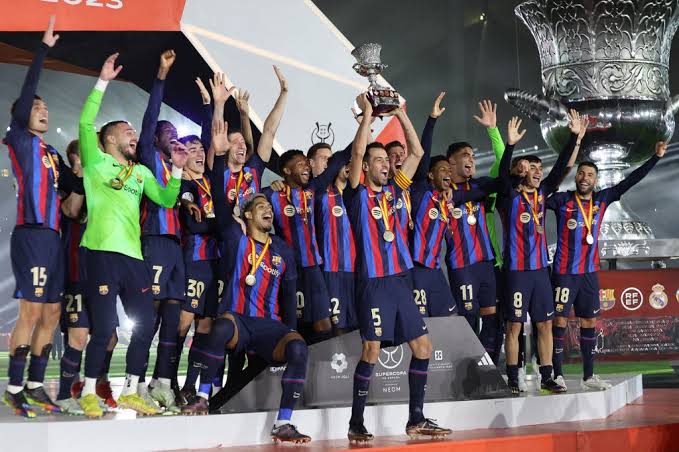
The move coincided with a revolutionary change in the tournament’s structure, transforming it from a single match to a high-stakes “Final Four” format.
By bringing the Spanish Super Cup to a neutral, international stage, the RFEF has successfully expanded the competition’s brand reach.
- Increased Viewership: Matches are scheduled to suit prime-time global audiences.
- Tourism and Exposure: Saudi Arabia uses the event to showcase its world-class sports infrastructure.
- Star Power: The presence of icons like Kylian Mbappé and Lamine Yamal ensures sold-out stadiums in Riyadh and Jeddah.
Strategic Partnerships for Future World Cups
Hosting the Spanish Super Cup is also a strategic move in the world of sports diplomacy.
As Saudi Arabia prepares to host the 2034 World Cup and Spain co-hosts the 2030 edition, the collaboration fosters a powerful alliance between the two footballing nations.
The tournament serves as a testing ground for large-scale event management and technological innovation in sports.
Ultimately, the Spanish Super Cup in Saudi Arabia represents the fusion of tradition and the future of global football business.
Do you think moving domestic trophies abroad helps grow the sport globally, or should traditional tournaments always stay in their home countries for the local fans?