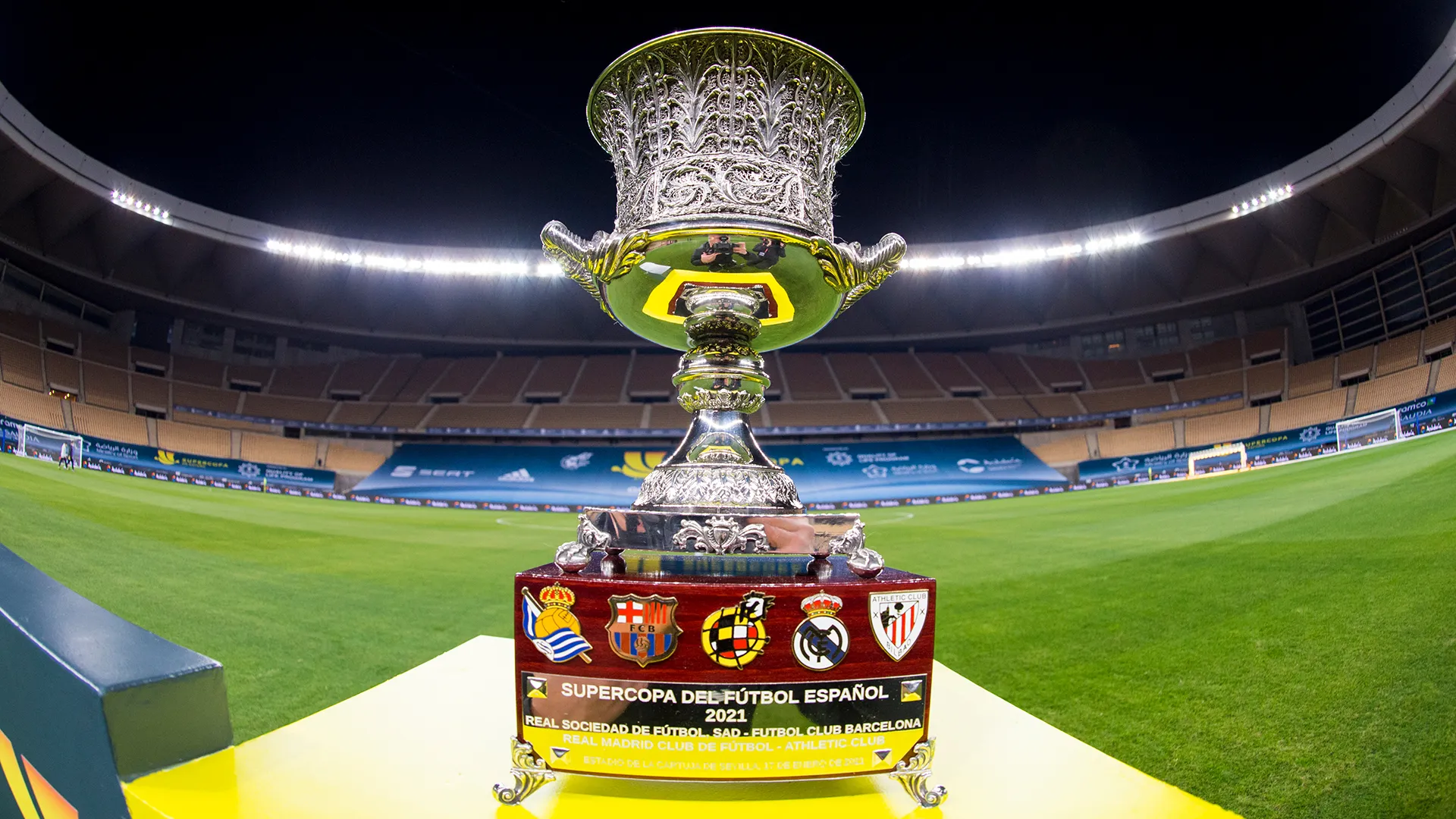
The debate over the location of the Spanish Super Cup has become a central theme in modern football discussions.
For decades, this prestigious trophy was contested on Spanish soil, serving as a celebratory bridge between the pre-season and the competitive year.
However, recent years have seen the tournament travel thousands of miles away to the Middle East.
While this move brought significant financial growth, fans across the Iberian Peninsula are asking if the competition will ever return to its roots.
The Current Contract: Saudi Arabia Until 2029
The Royal Spanish Football Federation (RFEF) currently has a firm commitment to host the Spanish Super Cup in Saudi Arabia.
This partnership, which began in 2019, was recently extended, ensuring that the four-team “Final Four” format remains in the Kingdom until at least 2029.
Each edition generates approximately €40 million, providing a vital financial lifeline for lower-league Spanish football and the RFEF’s development programs.
Despite the lucrative nature of the deal, player and fan discontent continues to surface.
For many supporters, the essence of the Spanish Super Cup is lost when local fans cannot attend the matches due to travel costs.

These concerns often spark rumors about a potential early homecoming, though the legal and financial obligations make a sudden move highly unlikely.
The Push for a Rotating Host Model
One potential future scenario involves the Spanish Super Cup adopting a rotating host model.
This would allow the RFEF to satisfy international commercial contracts while periodically bringing the final back to iconic venues like the Santiago Bernabéu or Spotify Camp Nou.
Such a compromise could bridge the gap between global brand expansion and traditional fan accessibility.
- Pros of Spain: Increased local atmosphere, shorter travel for players, and lower fan costs.
- Pros of Global Hosting: Massive sponsorship revenue and expansion into emerging football markets.
Balancing Financial Growth with Footballing Tradition
Ultimately, the decision to bring the Spanish Super Cup back to Spain depends on the Federation’s long-term vision.
As the current contract nears its end toward the close of the decade, the pressure from traditionalists will likely intensify.
While the global reach of the Spanish Super Cup has never been higher, many feel the soul of the tournament belongs in the cities that live and breathe La Liga every week.
Do you believe the financial benefits of hosting the Spanish Super Cup abroad outweigh the loss of traditional home-crowd atmosphere?